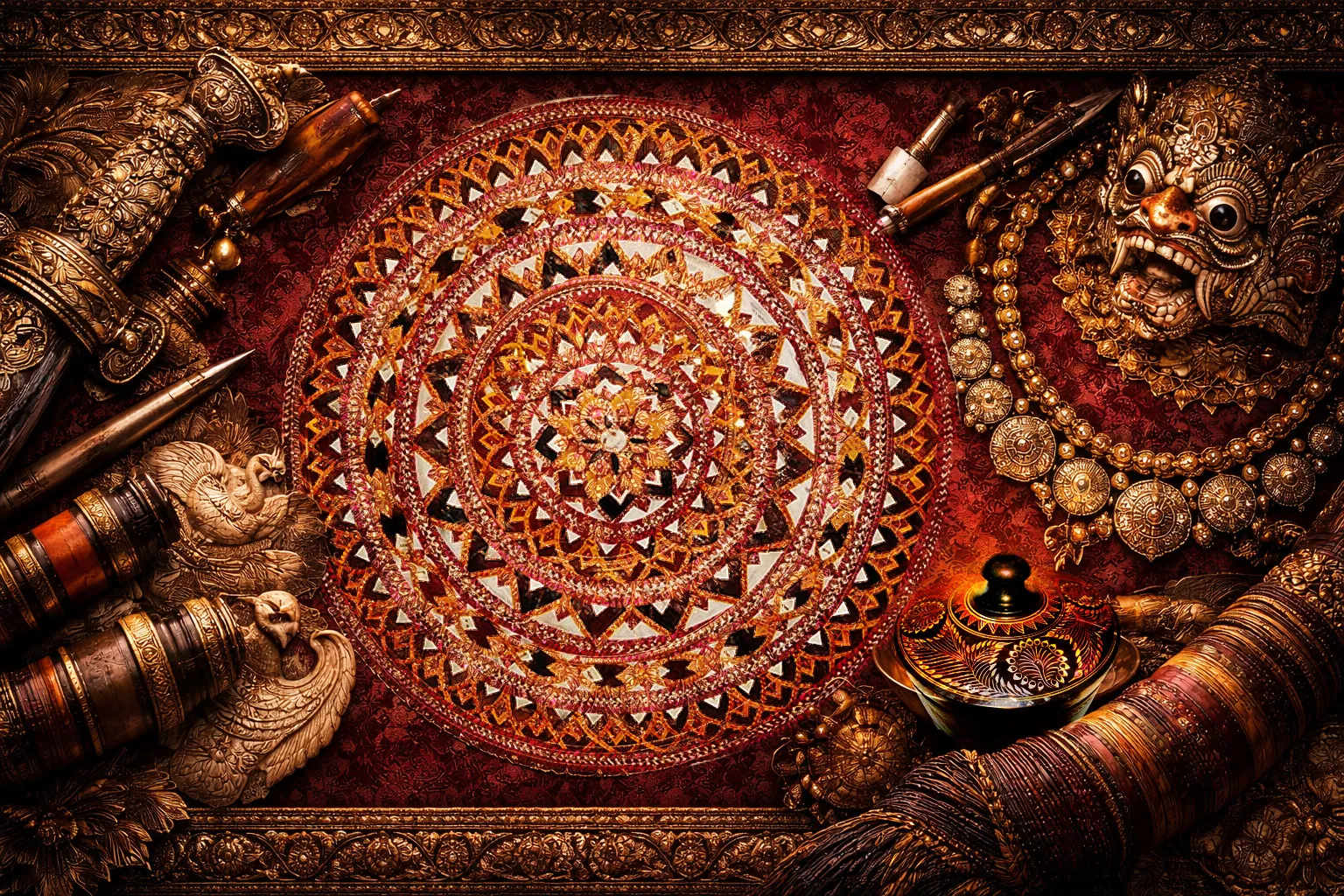
Kandy.
The Last Kingdom.
Sri Lanka's cultural capital has never been conquered. Its mountains
protected it from every colonial power that tried. What remains is
something rare,
a living, breathing ancient city where tradition
moves at its own pace.
The city that refused
to be conquered.
Kandy is not simply a city. It is the spiritual and emotional centre of the Sinhalese Buddhist world — the custodian of an identity that survived Portuguese, Dutch, and British colonial conquest through the sheer protection of its mountain walls.
Nestled in a natural bowl of forested mountains at 465 metres above sea level, Kandy served as the last royal capital of the Kandyan Kingdom from 1469 until 1818 — the longest-surviving independent kingdom in Sri Lanka. The city took its name from the Sinhala word kanda, meaning mountain, and the mountains gave it an almost mystical immunity from invasion.
Today, Kandy is the administrative capital of the Central Province, Sri Lanka's second-largest city, and the undisputed cultural capital of the island. It is home to the Temple of the Sacred Tooth Relic — the most venerated Buddhist site in the world outside India — and was inscribed as a UNESCO World Heritage Site in 1988. Its annual festival, the Esala Perahera, is considered one of the grandest pageants in all of Asia.
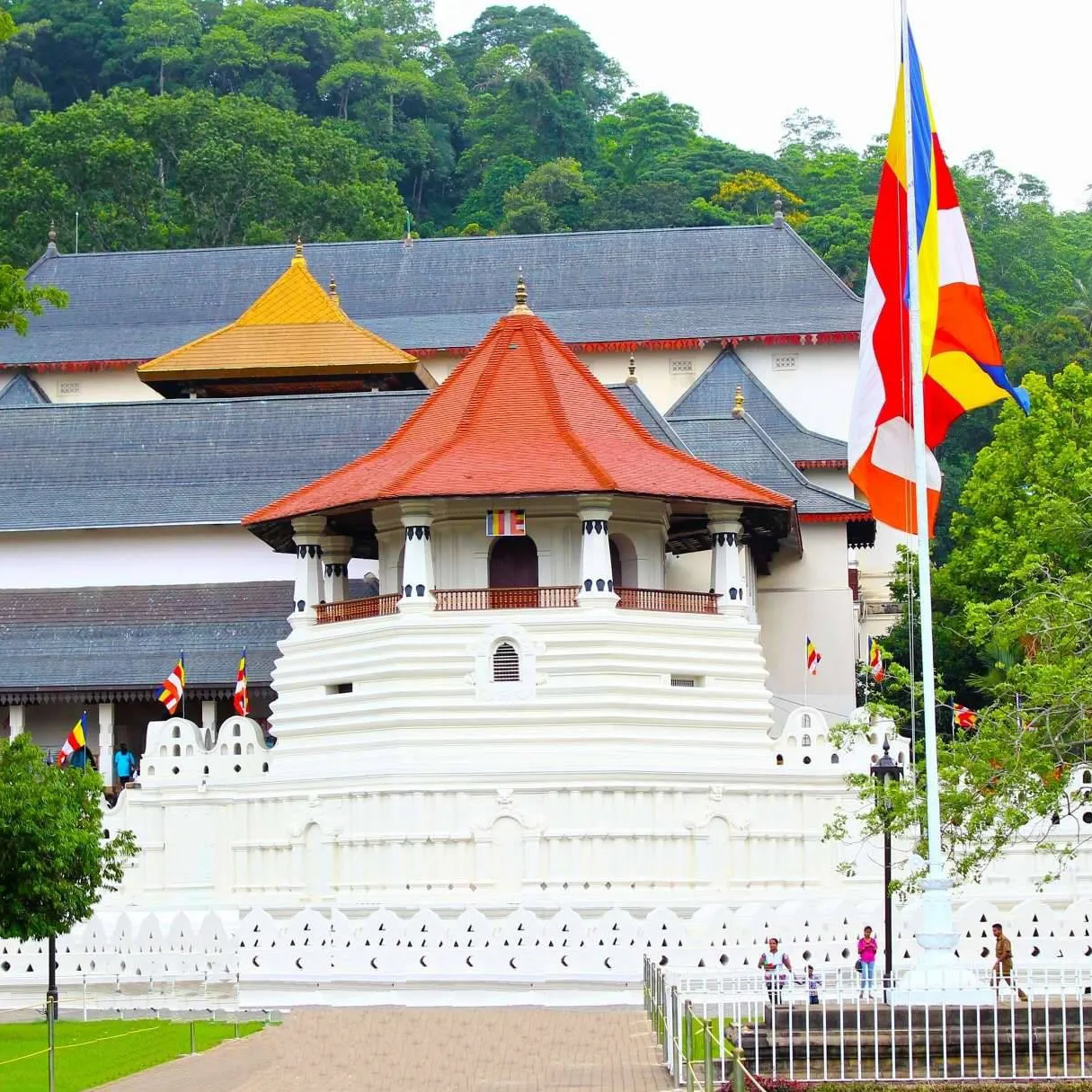
The places that define Kandy.
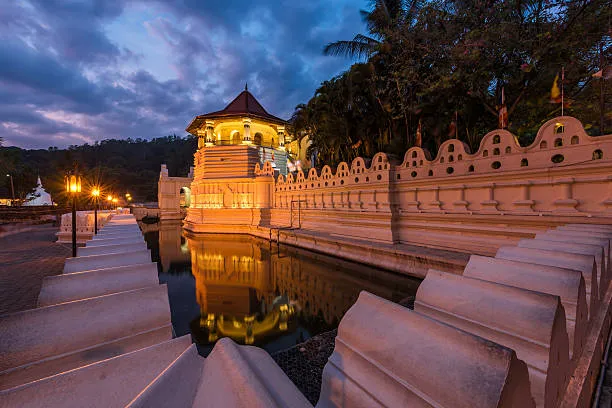
Temple of the Sacred Tooth Relic
Sri Dalada Maligawa
This is the holiest site in Theravada Buddhism — the temple that holds what is believed to be a tooth of the Buddha himself, retrieved after his cremation over 2,500 years ago. Three daily puja ceremonies — at 5:30am, 9:30am, and 6:30pm — open the inner shrine to visitors and worshippers, accompanied by thunderous traditional drumming.
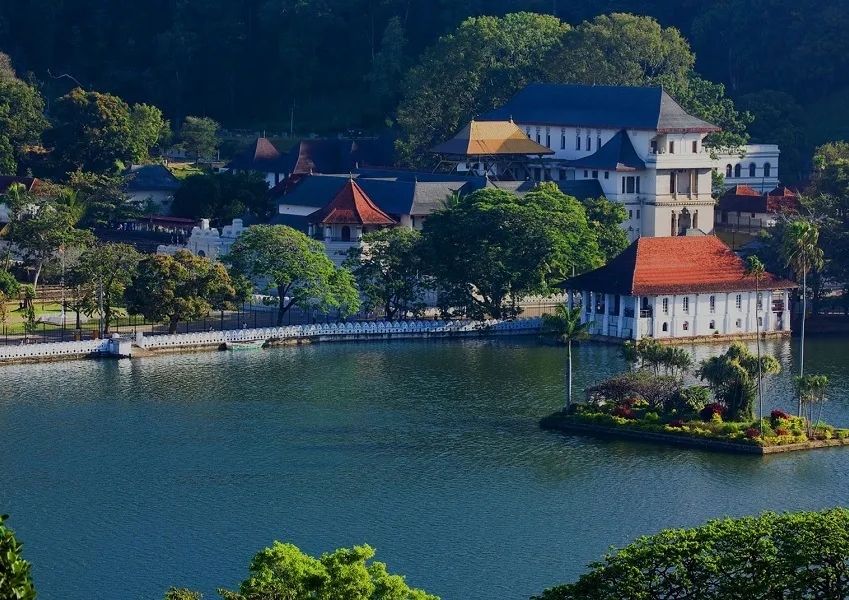
Kandy Lake
Kiri Muhuda — The Sea of Milk
An artificial reservoir built in 1807 by the last king of Kandy, Sri Vikrama Rajasinha. The 3.2-kilometre promenade around the lake is the perfect way to spend a slow morning: watching monks cross the bridge to the temple, fishermen casting lines, and the mist burning off the surrounding hills as the sun rises.
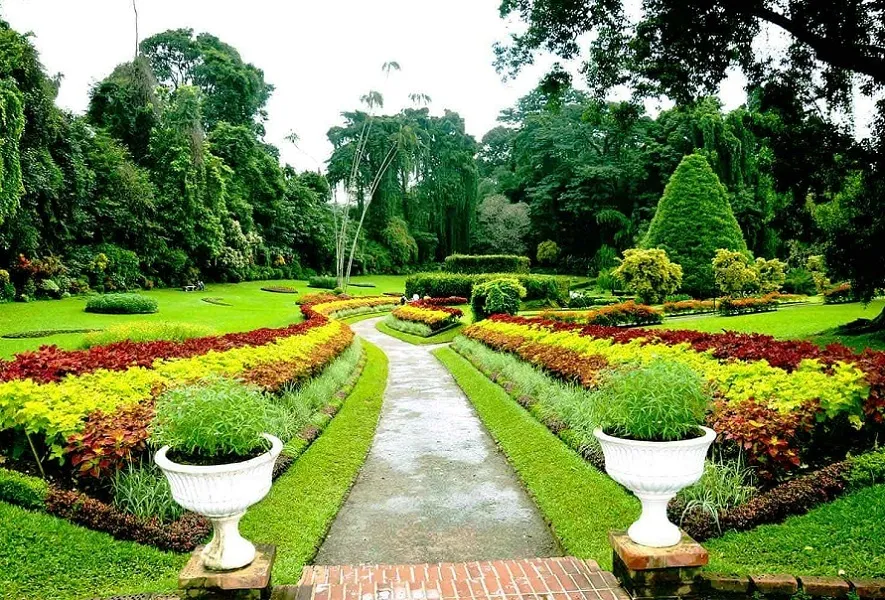
Royal Botanical Gardens, Peradeniya
147 Acres · 2 Million Visitors/Year
Founded in 1371 and formally established by the British in 1821, these gardens contain over 4,000 species of plants. The Royal Avenue of Palms is the single most photographed natural feature in Sri Lanka. The giant Javan Fig tree covers 2,500 square metres. Flying foxes (fruit bats) hang from branches along the riverside.
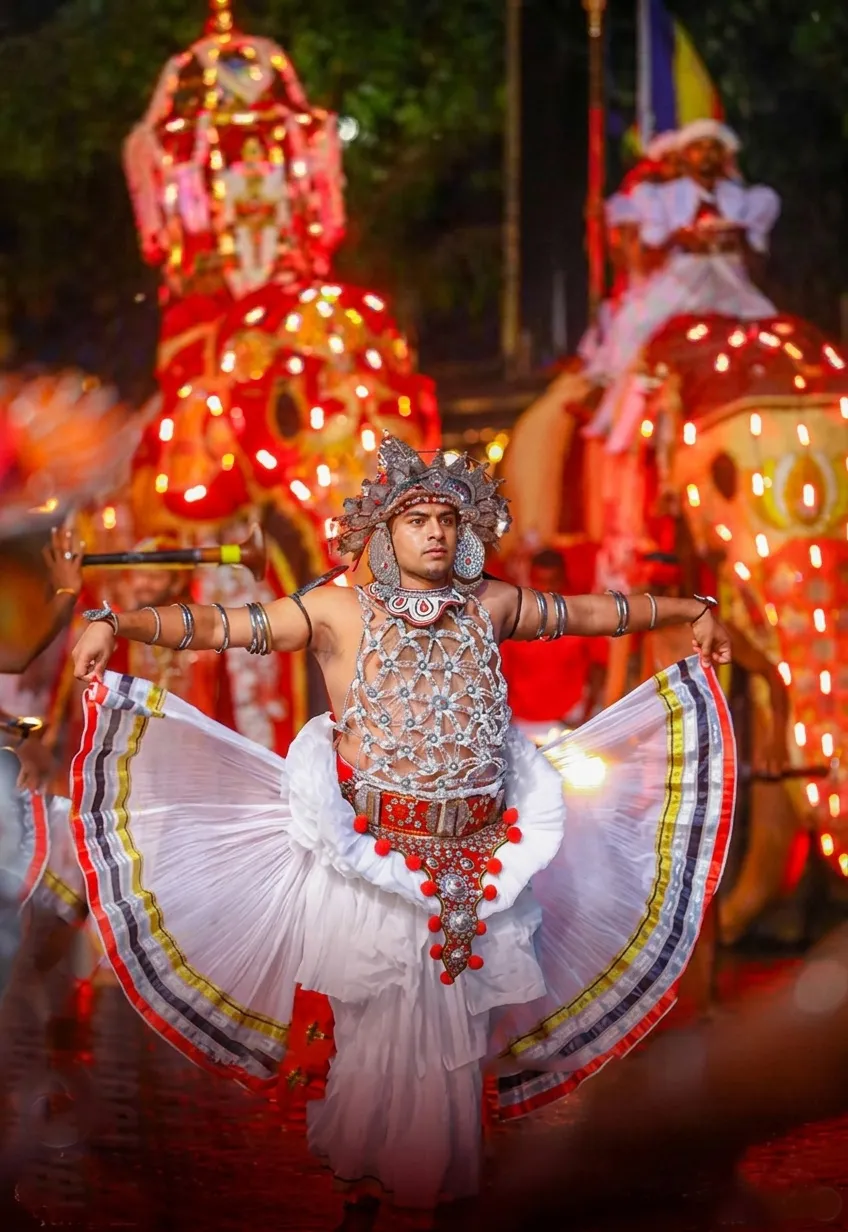
Kandyan Dance & Drumming
Ves, Pantheru, Naiyandi & Udekki
Designated an Intangible Cultural Heritage of Humanity by UNESCO, Kandyan dance is one of the world's living classical dance traditions. Nightly cultural shows at the Kandyan Arts Association Hall offer accessible introductions, but the most authentic experience is witnessing the dance at the Esala Perahera festival.

Udawatte Kele Sanctuary
The Royal Forest Above Kandy
A 104-hectare urban wildlife sanctuary home to giant squirrels, purple-faced leaf monkeys, sambar deer, over 68 species of birds, and countless butterflies. Forest trails wind through the canopy to elevated viewpoints that offer sweeping panoramas of the city and surrounding hills.
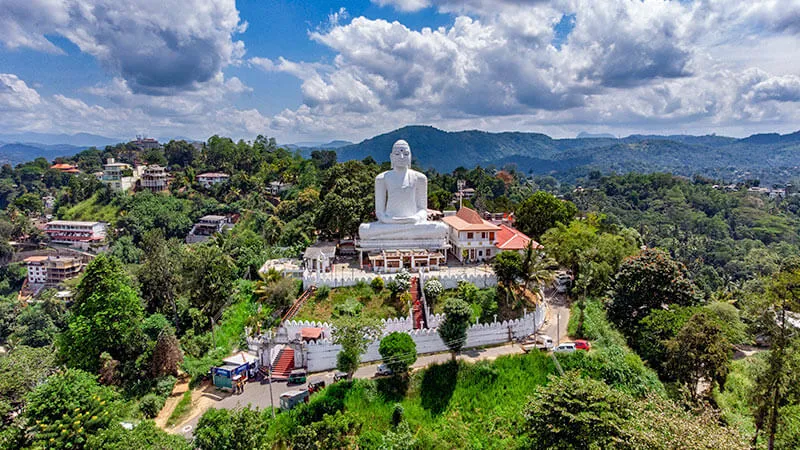
Bahirawakanda Vihara
The Giant Buddha Above the City
A 26‑metre white Buddha statue on a hilltop, completed in 1972. The views from the summit are among the finest in the city, offering a complete panorama of Kandy's bowl-shaped landscape, the lake, the temple, and the encircling hills.
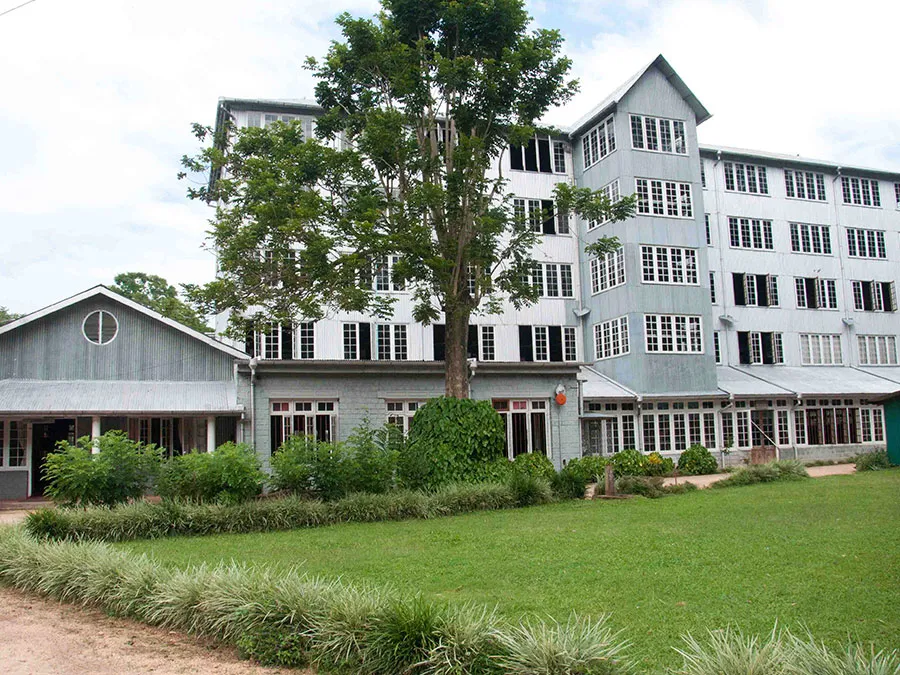
Ceylon Tea Museum
Hantana, 4km from City
Housed in the historic Hantana Tea Factory (1925), the museum traces the story of Ceylon tea from James Taylor's first plantation in 1867. Original machinery, rare photographs, and a tasting room make this a fascinating stop.

Lankatilaka Temple
Constructed 1344 CE · Udunuwara
One of the most dramatic temple complexes in Sri Lanka, rising four storeys from a massive rock outcrop. The inner shrine houses a large standing Buddha image, and the walls are covered in ancient murals. Combines Sinhalese and South Indian architectural styles.

Pinnawala Elephant Orphanage
Rambukkana · 42km from Kandy
Established in 1975 to care for orphaned and injured wild elephants, now home to over 90 elephants. The twice-daily river bathing sessions — 10am and 2pm — are among the most extraordinary wildlife experiences in Asia.
The Esala Perahera
For ten consecutive nights in July or August, the Esala Perahera — the Festival of the Sacred Tooth Relic — transforms Kandy into one of the grandest pageants in Asia. Over 100 decorated elephants, thousands of Kandyan dancers, torchbearers, and drummers process through the city. The Randoli Perahera on the final night is a once-in-a-lifetime experience.
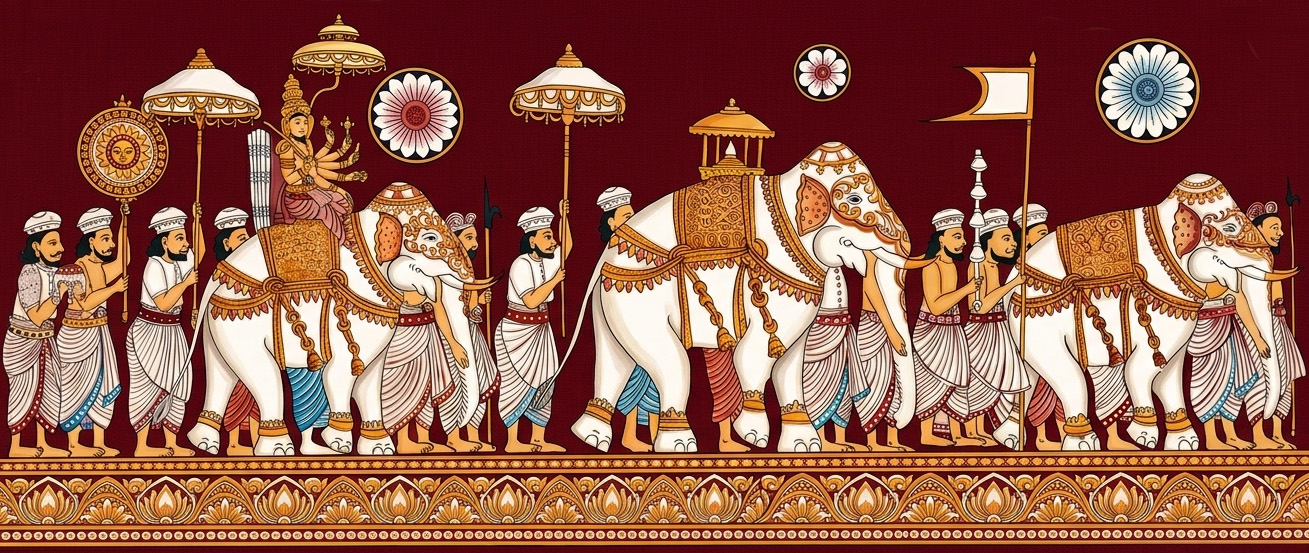
A culture that has been carefully tended for centuries.
The Kandyan People
The Kandyan Sinhalese are the ethnic and cultural group that formed the core of the Kandyan Kingdom's aristocracy and commoner class. Their identity was shaped by centuries of relative isolation in the central highlands — the mountains that protected them from colonisation also created a distinctive culture that evolved separately from the lowland Sinhalese communities of the coast.
Today, Kandy's population is ethnically diverse, including significant Sinhalese, Tamil, and Sri Lankan Moor communities, but the Kandyan cultural tradition — its art, dress, music, and ritual — remains the dominant cultural identity of the city.
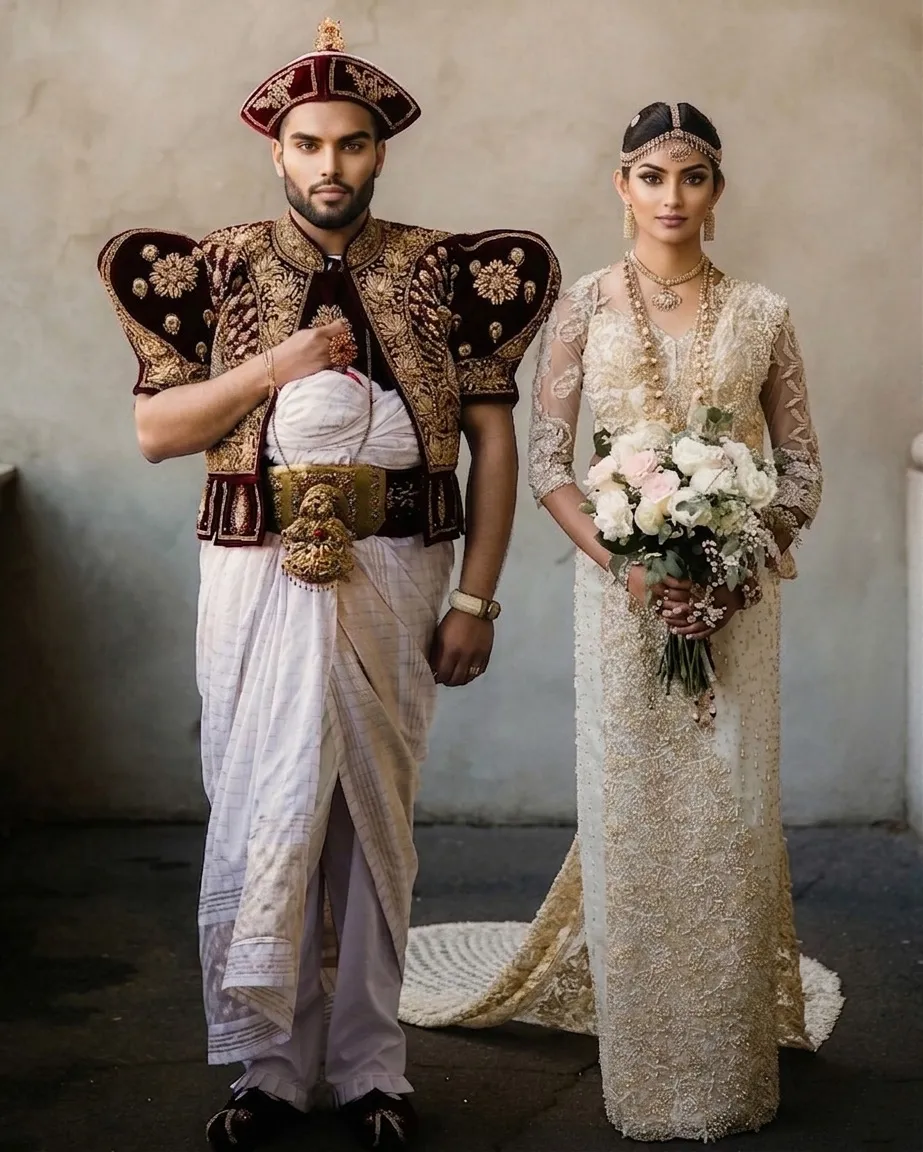
Kandyan Craftsmanship
These crafts are living traditions. Many are sustained by local cooperatives and NGOs working to preserve Sri Lanka’s intangible cultural heritage.

Kandyan Dance & Drumming
Designated an Intangible Cultural Heritage of Humanity by UNESCO, Kandyan dance is one of the world's living classical dance traditions. Nightly cultural shows at the Kandyan Arts Association Hall offer accessible introductions, but the most authentic experience is witnessing the dance at the Esala Perahera festival.
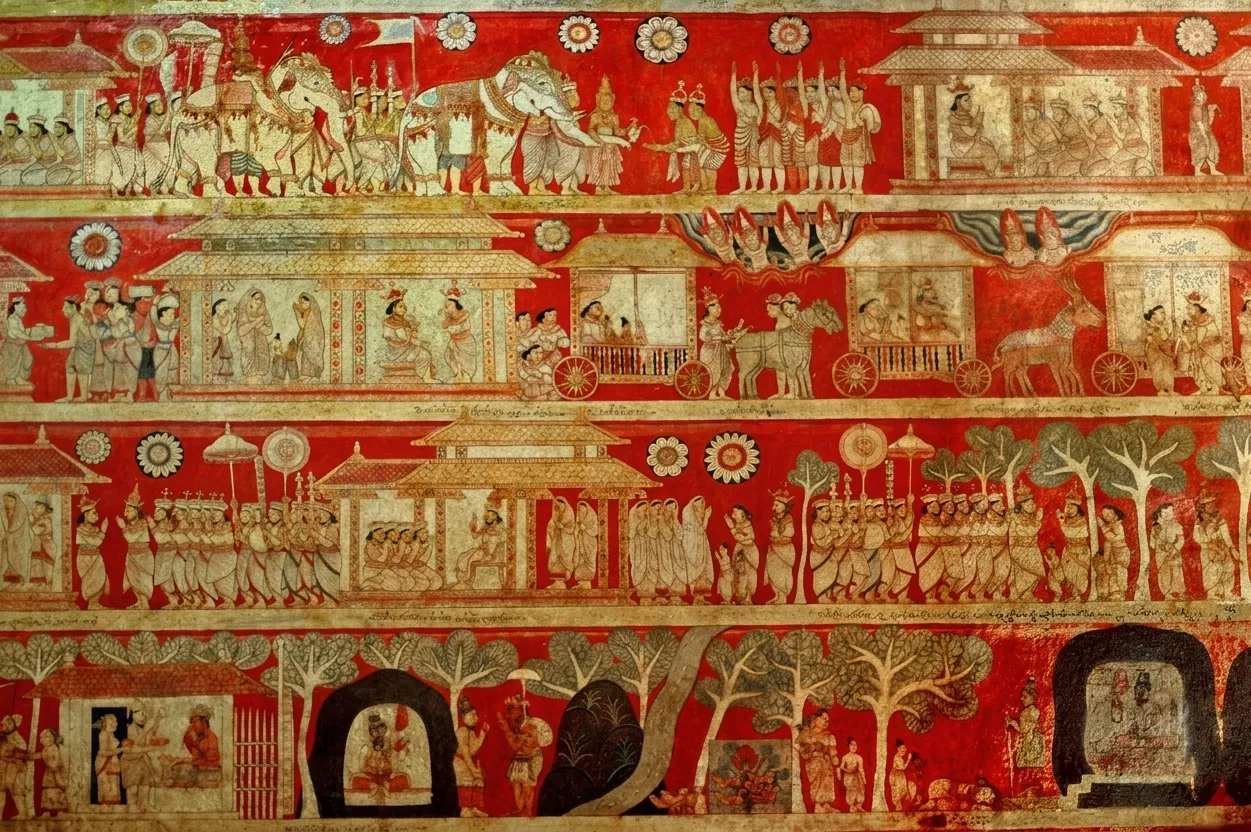
Temple Fresco Painting
The Kandyan school of painting, exemplified by the remarkable murals of Degaldoruwa Raja Maha Vihara and Dambulla Cave Temple, uses flat, two-dimensional figures narrating Jataka tales in vivid mineral pigments that have survived centuries.

Embekke Wood Carving
The Embekke Devale, 14km from Kandy, contains wooden columns carved with extraordinary precision — mythical beasts, wrestlers, celestial maidens, and geometric patterns so finely executed they appear cast rather than carved.
Handloom Weaving
The Kandy region produces some of Sri Lanka's finest handloom textiles. Dumbara mats — intricate woven floor coverings made from illuk grass and dyed with natural plant pigments in geometric Kandyan patterns — are a particularly distinctive craft form.
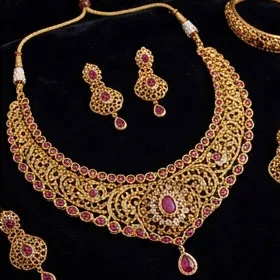
Kandyan Jewellery
Kandyan-style jewellery features intricate filigree work in silver and gold, often incorporating precious stones. Traditional pieces include the Konde Patta (hair ornament), Mukkutti (nose jewel), and Panguwa (armlet).

Kandyan Architecture
The distinctive Kandyan architectural style — characterised by tiled roofs with sweeping multiple gabled eaves, whitewashed walls with red-trimmed borders, and elaborate carved wooden work — can be seen throughout Kandy and the surrounding hills.
The city is just the beginning.
The Kandy District extends across the central highlands in every direction, encompassing waterfalls, ancient temples, working tea plantations, wildlife sanctuaries, and the most scenic train journey in the world.
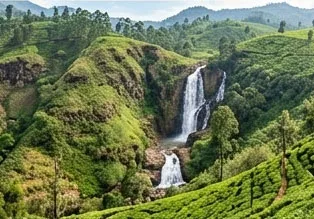
Ramboda & Devon Falls
Ramboda Falls plunge 109 metres through a hanging valley of tea estates; Devon Falls drops 97 metres through dense forest. Best seen in morning light.
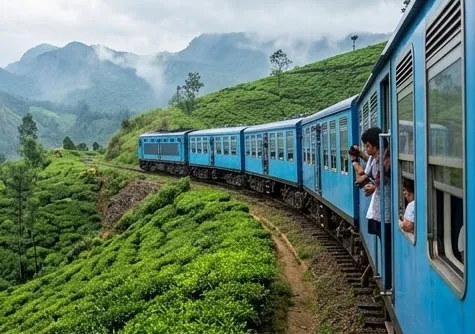
Hill Country Train
The Kandy-to-Ella train ride is one of the most beautiful rail journeys in the world. Built in the 1860s, it climbs through tea estates, cloud forest, and waterfalls.

Three Temple Loop
Lankatilaka Vihara (1344 CE), Embekke Devale (extraordinary 14th-century woodcarvings), and Gadaladeniya Vihara — a coherent artistic statement about medieval Kandyan civilisation.
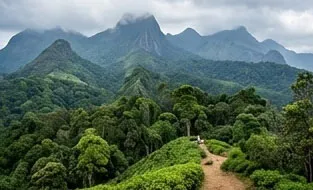
Knuckles Mountain Range
A UNESCO World Heritage Site and one of the last remaining primary rainforests in Sri Lanka. Home to endemic species, offering exceptional trekking and birdwatching.
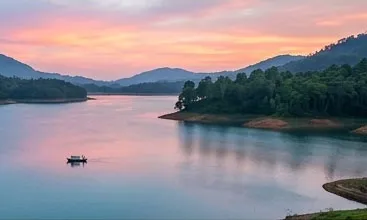
Victoria Reservoir
Sri Lanka's largest hydroelectric project, forming a vast reservoir in forested hills. The surrounding Victoria-Randenigala-Rantambe Sanctuary is a biodiversity hotspot.
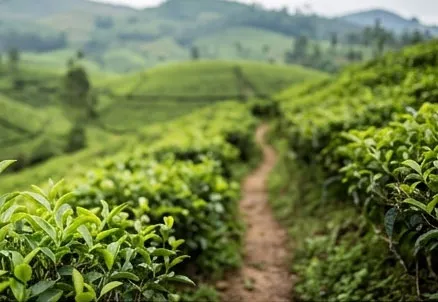
Hantana Hills Tea Walk
Tea estates on the hills behind Kandy produce distinctive highland teas. Guided walking tours offer spectacular views back over the city.
Ten reasons Kandy belongs on every journey.
The Only Unconquered Kingdom
Kandy resisted Portuguese, Dutch, and British colonisation for centuries longer than anywhere else in Sri Lanka. The city you walk through is genuinely shaped by its own royal tradition — not retrofitted for tourism.
A UNESCO World Heritage Site You Can Actually Live Inside
Most UNESCO sites are cordoned off behind barriers. Kandy is a living city where the heritage is woven into everyday life — monks walking the same paths kings once walked, markets operating within sight of a 16th-century temple.
The Most Sacred Buddhist Experience in Asia
The Temple of the Tooth is not a museum. It is an actively functioning place of worship that draws pilgrims from across the Buddhist world. Attending a puja ceremony is profoundly moving regardless of your faith.
One of the World's Great Botanical Gardens
Peradeniya rivals Kew Gardens in its scope and surpasses it in its exuberance. The Royal Avenue of Palms alone is worth the journey from Colombo.
The Esala Perahera — Unmissable if Timing Allows
If your visit coincides with July or August, the Perahera transforms Kandy into something entirely beyond description. A hundred decorated elephants, ten thousand torches, the oldest procession in continuous existence.
The Gateway to Sri Lanka's Most Beautiful Landscapes
From here, the train to Ella passes through landscapes that are genuinely, objectively, one of the world's most beautiful train journeys. Tea country, cloud forest, waterfalls, ancient bridges.
A Living Classical Dance Tradition
Kandyan dance is not a re-enactment for visitors. It is one of the oldest continuous dance forms in Asia, passed from teacher to student for over 2,000 years.
Food That Cannot Be Replicated Elsewhere
Kandyan cuisine — its spice combinations, its coconut milk curries, its ancient sweetmeats — is a product of this specific geography and this specific history.
A Compact, Walkable City with Real Character
Kandy is not overwhelming. Its scale is human. Most central attractions are within walking distance, the streets are genuinely interesting, and the locals are among the most welcoming people in Sri Lanka.
A Base for the Entire Island
Kandy's position at the geographical centre of Sri Lanka makes it the ideal hub for exploring the whole country. Colombo is three hours west. Dambulla and Sigiriya are 75km north. The hill country is an hour south.
Kandy is where our work begins.
AFT Kids & Elders operates from the heart of Kandy. Every scholarship, every elder visit, every community health clinic begins and ends in the city and districts you have just read about. The children we support walk to schools near the lake. The elders we visit live in the hills surrounding the botanical gardens. When you support AFT, you are supporting the living, breathing human community of this extraordinary place.
Kandy – The Royal City • Where tradition meets tomorrow